
Fence Materials & Design
Standard Fence Materials
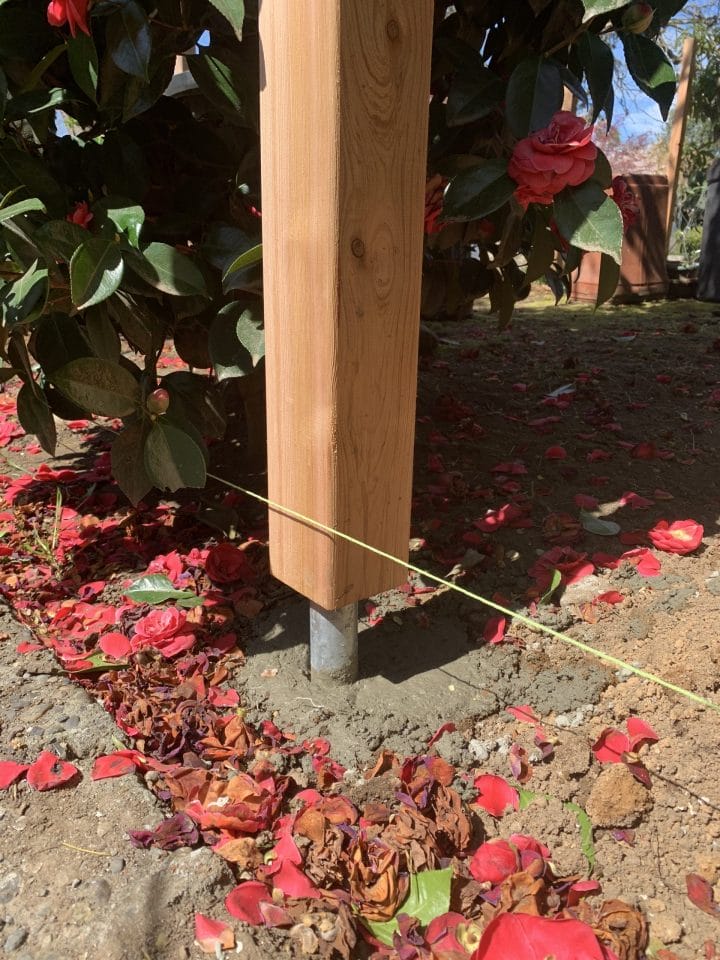
Cedar Post on Pipe
We use cedar post on pipe which is galvanized 1.5″ pipe embedded in 4×4 cedar posts to help prevent wood contact with the ground which prevents the post from rotting out at the bottom.

Steel Brackets
If needed, we can secure a post to concrete for your fence. We designed and build the brackets to attach to concrete that are made of 1/4″ steel and use 4 concrete anchors to make sure it is secure.

All Cedar Material
Cedar is the best material available for fences and will outlast any pressure treated wood. It also will deform the least for the life of the fence. Treated wood comes very wet and when it dries, it can deform significantly, causing your fence to deform.
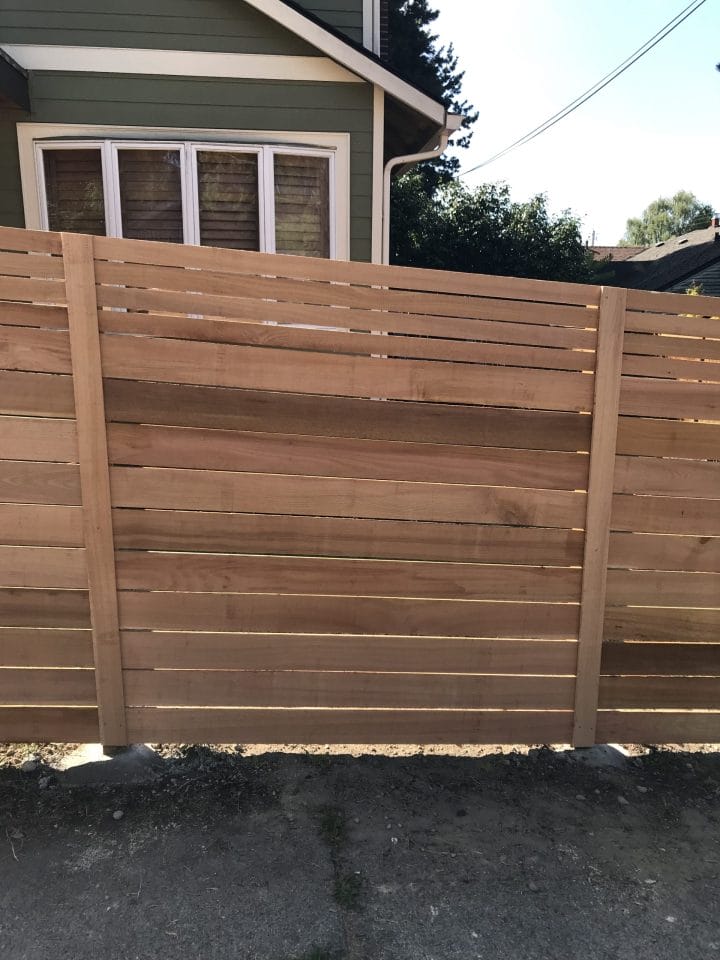
Stainless Steel Nails
We only use stainless steel ring shank nails because they are the best for cedar. Galvanized nails react with cedar and leave black marks down your fence when it gets wet. The ring shank nails have rings that hold the nails better to last over the years.
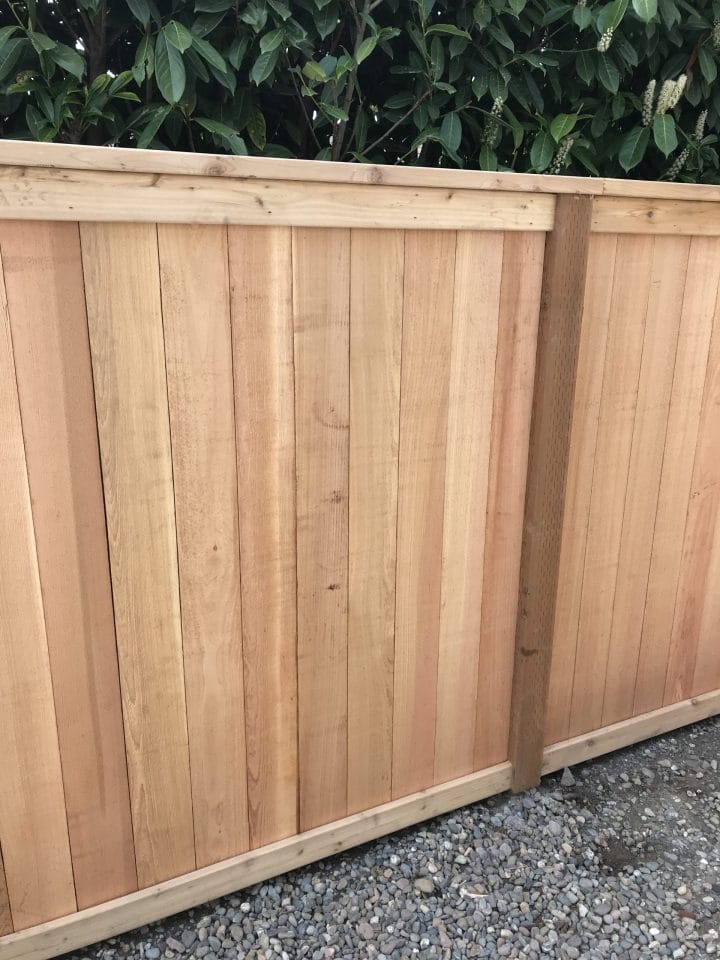
Exterior Screws
We only use exterior decking screws when attaching our framing and caps. This is better than the nailed option because screws hold better and for longer even if the wood gets dried out.

Coated Hinges
We use standard powder coated black hinges and lag bolts to secure the gate. Lag bolts outperform normal screws because they are much stronger and hold for the life of the gate.
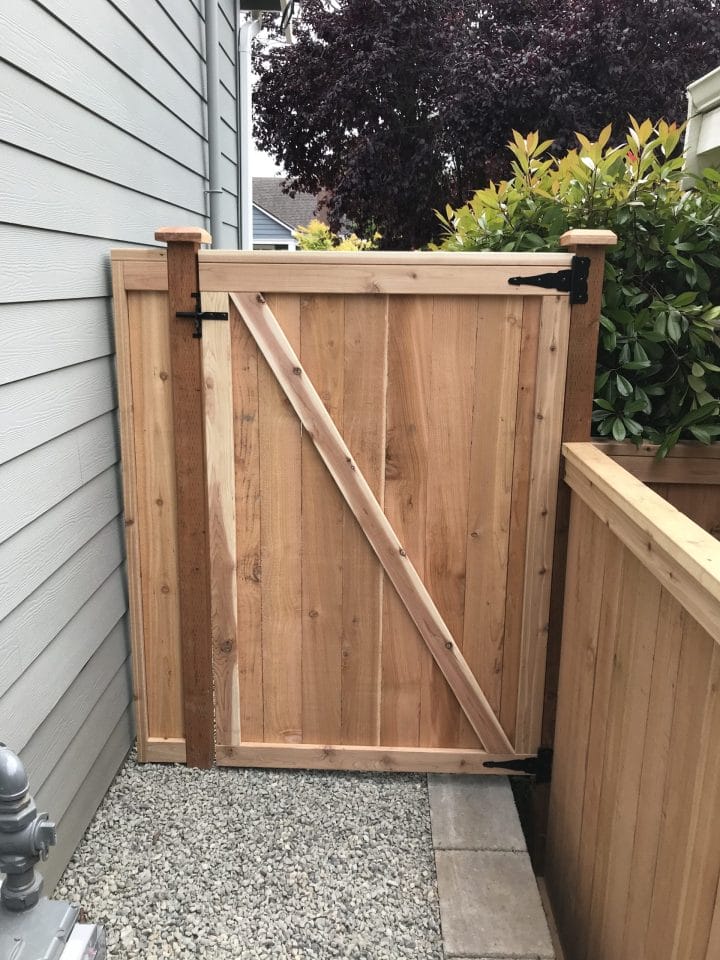
Heavy Duty Latches
We only use heavy-duty post mount gate latches attached with lag bolts. They hold up for much better than the older style and are convenient because you can easily open them from both sides and add a lock to the side that swings open.

Need A Free Estimate?
Get your free estimate for a new cedar fence in Seattle. We'll schedule your estimate right away.
Design Considerations
Follow the Grade or Stepped
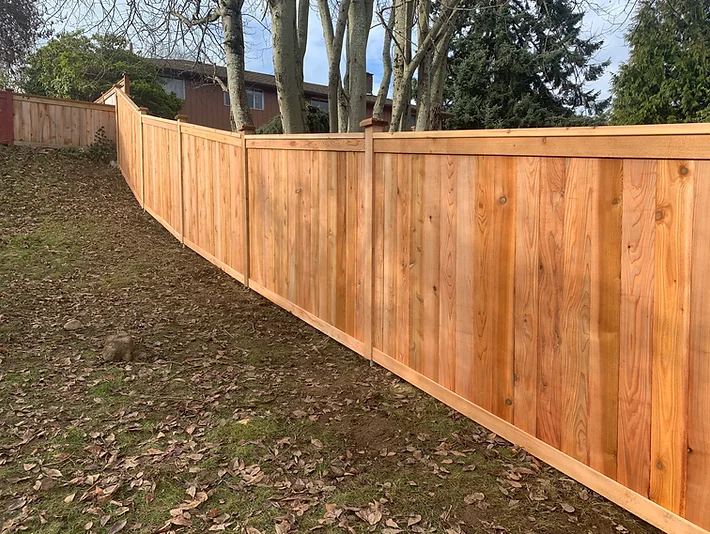
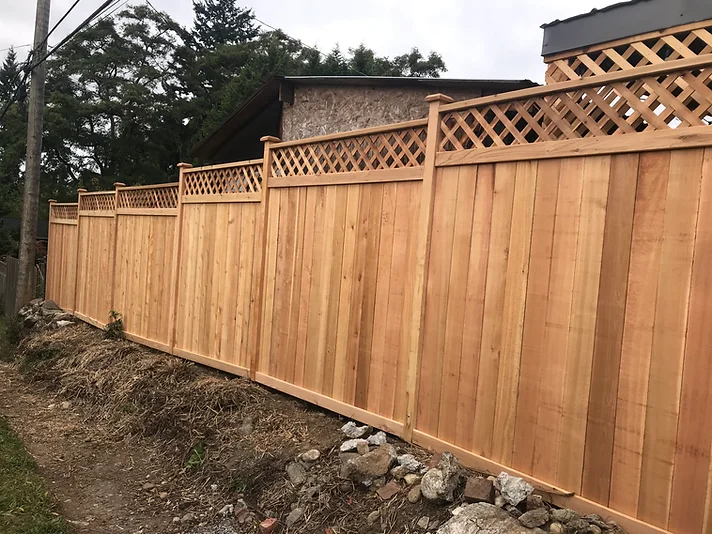
If your yard is not perfectly level, then you’ll need to chose between following the grade or stepped. In both case, we will follow the grade with the bottom of the fence so that there are not gaps in the fence where pets can get out or in. Here are examples of both vertical and horizontal style fences that follow the grade and step.
Follow the grade
Stepped
Board Size and Pattern
When it comes to choosing the board size and pattern for your cedar fence, there are a few things to consider. First, think about the style you want to achieve. A more traditional look may call for a standard board size and pattern, while a modern design may benefit from a more unique approach. Additionally, consider the function of the fence – will it be primarily for privacy or aesthetics? Once you have a clear idea of your goals, you can work with us to select the perfect board size and pattern for your cedar fence.
Board Spacing
Spacing on a cedar fence is a crucial factor that can make a huge difference in both the appearance and functionality of the fence! With the right spacing, your fence will not only look great but also be sturdy and provide the desired level of privacy.
Fence Height
Choosing the right fence height for yard is an important decision that can affect your privacy, security, and overall aesthetic. Factors to consider include your local zoning laws, the purpose of the fence, and your personal preferences. With careful consideration, you can find the perfect fence height to meet your needs and enhance your outdoor space.
Tight Knot Cedar vs Clear Cedar
Deciding between clear cedar and tight knot cedar for a fence requires careful consideration. Clear cedar is a superior quality wood that has a consistent appearance and is free of knots. Tight knot cedar, on the other hand, has knots and a more rustic look. Ultimately, the choice between the two depends on personal preference and specific needs.
Need A Free Estimate?
Get your free estimate for a new cedar fence in Seattle. We'll schedule your estimate right away.